Pages

Wednesday, 16 October 2013

FUTURE-ROCKER SUPPLEMENT: URBAN SPECIAL, part one


This is an ongoing series of articles that will be spread across both FUTURE-ROCKER and MONOBLOG over the coming editions, featuring the work of the visionaries who document the more 'colourful' side of 21st Century life.

SEBASTIAN LEE: DUBAI'S VERTICAL RESPONSE - a portfolio

FUTURE-ROCKER is blown away by Sebastian's vertiginous shots of Dubai's skyscrapers. His super-sharp photographs make the desert city look like a megalopolis from a science fiction movie. How does he prepare for a shoot? See below!


Sebastian says: For cityscape work, you need a comfy pair of shoes, lots of recon work and patience.  Since I mainly shoot late at night it's a lot of long exposures, dodging cars sometimes, getting strange looks and comments from drunk people walking back to their hotels.  I hope to get more elevated shots over the next year from roof tops and high balconies.


All photographs copyright Sebastian Lee, 2013

JUSTIN PALMER: THE OREGON 'DATA' TRAIL

''I like the idea of data as a raw material.''


Justin Palmer's gorgeous 'data maps' have rightly caught the eye of the design community in recent months. We ask him how he turned a relatively sedate subject - the age of the buildings in the neighbourhoods around Portland - into a prismatic array of futuristic hieroglyphs.

To fully enjoy them as wonderful abstract pieces of art, we've taken our favourite bits of the map and zoomed in. If you want to know more, see the link at the bottom of this page.

Below: Beaverton, Oregon


Below: Close-up of Ladd's Addition, southeast Portland


FUTURE-ROCKER: Justin, These maps are really stunning, and fascinate on so many levels. How did you do them?

The map was possible through open source tools and open access to public data.  The city of Portland maintains and releases a bunch of public data, and the building dataset is one of those releases. The dataset contains a record of over 600k buildings and many of them list the year they were created. 

After acquiring the data, I imported it into the open source map editor, TileMill.   This is where I worked on the visuals of the map, tweaking the color ranges via Carto, adding rivers and parks, etc.  After I was comfortable with everything, I exported the resulting tiles to MapBox and then used GitHub Pages  to host the website.

It's kind of fascinating to think that none of this would've been possible five years ago.  The tools didn't exist, and the data was locked away on some hard drive.

FR:  What does 'data' mean to you? To many people, it represents something scary and Orwellian, whereas you show that it can be have an inherent aesthetic quality.

Data forms the basis of art and information.  I think cartography is an especially compelling use of data, because it's easy for individuals to identify with.  People see themselves, their lives, on a map; places they've been, places they want to go, places they feel safe and places they fear.

I like the idea of data as a raw material.  Like most raw material, it's up to the craftsman to decide if they want to use it responsibly.  Data will always exist, and unlike other raw material, it's only going to become more abundant with time.  

FR:  Have you had any offers to 'do' other cities? Or would you like to?

I've been informally asked to do other cities, but I doubt I will.  Portland is my home and it's the place I identify with the most.  However, I've seen other maps pop up for the Netherlands, NYC, Chicago and London among others.

FR:  What originally got you started?

I guess you could say I started out doing design for software.  Not long after, I started programming in a bunch of different programming languages.  Along the way, data visualization became a great way for me to merge the two skill sets. 

I've been influenced by a number of sources.  I really love the way the NYTimes uses data to help tell a story.  I'm also a big fan of Eric Fisher's work.

Below: North Portland, with the Willamette River on the left


Below: Showing neighbourhoods between Beaverton ( in the north ) and Tigard ( south )


Below: Portland, showing the Willamette River ( grey ), and the Banfield Expressway ( black line curving across the centre ).


Below: Expanse of neighbourhoods, with the Banfield Expressway ( across the top of map )


Below: Map of Portland


Below: Sabin / Irvington neighbourhood, northeast Portland


For get more info - go to Justin's Website and follow the link to his blog.

Our look at the urban environment continues back here in a few months, and also in our sister mag, MONOBLOG.


N.I.N.A: ROCKnROLL SUPERHERO

Okay, so now you're wondering who exactly Jesse V. Johnson's Wonder Woman is... 


FUTURE-ROCKER introduces N.I.N.A.
Photo: Robert Sebree


Nina, you appear to have acted in loads of things, but it's difficult to pin down your biography on the internet. You seem to be an international woman of mystery. What's your background?

Haha, I know, I'm kinda confusing.

I was born in Denmark, Copenhagen - My Father is Russian - I moved to New York alone when I was 17, and moved to LA for good a few years ago!

At FUTURE-ROCKER, we love female vocalists, so it was great to discover that you are a new signing at Warner Brothers. What vocalists most inspired you?

Nine Inch Nails: Trent Reznor, he says what I only dare to think, he's so brave and brutally honest. He's my biggest inspiration.
  
U2's Bono: His vocals rips my heart out. I LOVE the sound of his throat - he's an inspiration as an artist and human being.
 
VAST ( Seattle industrial combo ): His lyrics mixed with beauty and aggression I love him.

Massive Attack ( Bristol UK trip-hop combo ): Sonically there's nothing better....

Lisa Gerrard ( Dead Can Dance vocalist and Ridley Scott's soundtrack muse ): She's from another world - her voice makes me cry...

Chester ( Linkin Park ) I LOVE the aggression, makes me feel so good...

Some great picks there. Okay, one last thing. Judging by all your promo pictures, you seem to have a rather pro-choice attitude to hair colour. ( We like our rockers dark and gothic, so we picked only NINA's black-haired photos ). What are you, a blonde or brunette?

I had to go blonde again... my agent threatened to drop me if I didn't... I work more as a blonde in this town!!


/////////////////////////////////////////////////////////////////////////////////

''I work more as a blonde in this town!!''

Photo: Robert Sebree


SCROLL DOWN FOR PREVIOUS EDITIONS


Tuesday, 16 July 2013

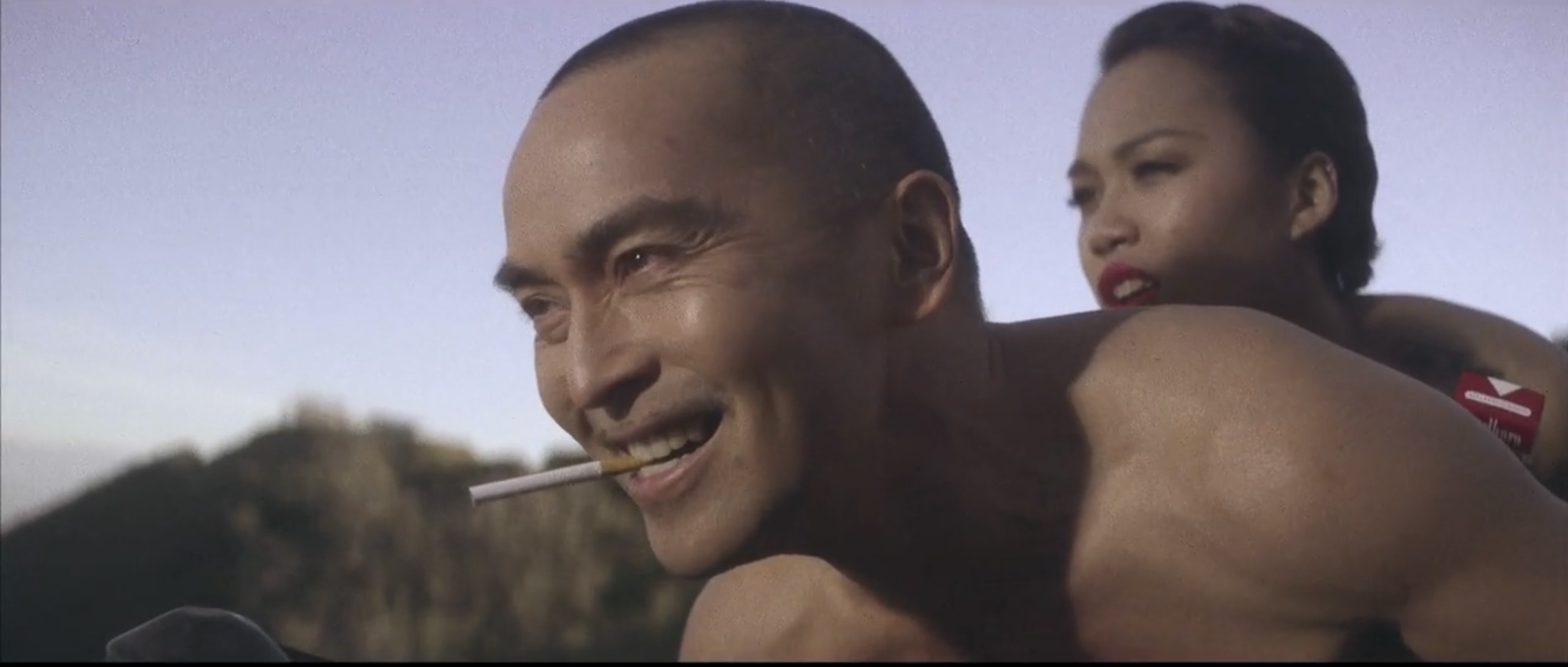
HANNI EL KHATIB - 'FAMILY' - INTERVIEW WITH DIRECTOR NICK WALKER


'PG-13' / SLIGHTLY TOO CHEEKY FOR WORK:
No octopi were harmed in the making of this film.


INTERVIEW WITH DIRECTOR NICK WALKER

Here at Future-Rocker's Bikini Atoll base, a big buzz went round the office over this spectacularly fun video from rising garage rocker Hanni El Khatib. Hanni, an LA resident and product of Filipino and Palestinian heritage, is one of the most exciting Alt Latino artists current on the scene.

The cheeky - and hilarious - promo is directed by LA photographer Nick Walker. We caught up with Nick to find out more.

- Nick, the 'Family' video that you did for HANNI EL KHATIB is one of most stylish & memorable we've seen for a while. As a photographer and film-maker, who are your influences?

- Obviously the legends... Penn, Avedon, Malick. But I think the influences I appreciate the most are the people that I've been fortunate enough to work for, and develop friendships from. Robert Maxwell, Hilary Walsh, Emmett Malloy, and Doug Inglish. They have taught me and supported me so much.

- The promo looks like it was shot in California. Is that where you live?

- Yes, I'm based in LA. Trips to NYC periodically, but I pride myself in being based here.

- Judging by the cast and credits of Hanni's promo, the team you had working with you looked pretty sizeable [ - it included 'octopus wrangler' & 'nutritionist'! ], was this an expensive shoot?

- The video was expensive. But I had a great team behind me, and couldn't have done it without them. Hanni's record label Innovative Leisure is incredibly supportive and made everything come together seamlessly.

- Was the promo influenced by any particular movie / genre? It reminds me of one of Tarantino's homages.

- In the end, the video paid homage to 'Japanese Pinky Violence' films [ - Japan's homegrown grindhouse / exploitation sub-genre ].  I had the idea years ago and developed my own story to what I thought it could be. Once Hanni and the label gave the green light, I did more research in found so many gems in that genre of film.

- The actors are great.

- The producers did a great job in helping cast the actors all locally in LA.

- What's been the reaction, so far?

- The video was really well received and since then, I've been writing treatments for other projects. I'm just planning on staying busy creating new content for both photo and video. 

To see more of Nick's work, click here.


BEYOND THE BLACK RAINBOW - A TALK WITH DIRECTOR PANOS COSMATOS

'It's been gratifying having the movie seen by more and more people who are attuned to its very particular frequency'


For those of you who feel that thoughtful, experimental - and even stylish - Science Fiction movies died with the advent of Star Wars and the proliferation of mindless summer blockbusters, FUTURE-ROCKER presents you with the antidote: The hallucinogenic world of Panos Cosmatos' BEYOND THE BLACK RAINBOW.


Set in the bold and futuristic year of 1983, the film features a young woman ( Eva Allan ), who finds herself trapped in an experimental lab watched over by the sinister Dr. Barry Nyle, played by the superbly twitchy Michael Rogers ( possibly channelling ubiquitous 80s genre star David Warner ). The film's exceptionally druggy atmospherics are augmented by the throbbing chromatic lighting and pulsing synth tracks of 80s-revivalists Sinoia Caves. Even the DVD cover art is styled in faux-VHS packaging. Beyond The Black Rainbow caused quite a stir at Cannes, and immediately got picked up for North American release by Magnet Films, purveyors of edgy horror, sci-fi and Asian cinema. FUTURE-ROCKER talked to director, Panos Cosmatos, currently in-between projects.


 - Panos, the film's attention to detail, regarding the feel of pre-Star Wars film-making, is astonishing. You are obviously deeply fascinated by this whole period.

My mother Birgitta Ljungberg was a huge inspiration to me. She was an avant garde sculptor with a very open and experimental imagination. No matter what crazy music I was into that I'd play for her, she would always listen intently and comment thoughtfully on it. She always encouraged me creatively, and even though she passed away many years ago, she is still an influence. My father taught me about film history. He had an impressive Betamax collection, mostly recorded from HBO, Showtime and Z Channel, that exposed me to every era and style of film-making. Through general exposure to him, and by watching him work, I learned about the film industry. I gleaned a lot from overhearing his phone conversations with various producers and executives.  Even though at home he was a very sentimental man, at work he was a hardened realist.

- Talking about your dad ( blockbuster film-maker John Cosmatos ), he directed Rambo First Blood II, a seismic cultural hit that bisected the 80's, so how did that huge mainstream success impact on your family, and on you as a youngster?

It was astounding, and somewhat frightening, to watch the Rambo phenomenon ripple across the cultural landscape. On a personal level it had the effect of exacerbating my already extremely shy nature. Since I grew up in Canada, away from Hollywood where such a thing was more commonplace, it made me feel incredibly self-conscious. It's interesting to look back now and see it all with the clarity of hindsight.


- BEYOND THE BLACK RAINBOW is definitely the vision of a Betamax / VHS obsessive, as if you filtered the Andromeda Strain, Kubrick, Cronenberg, Colossus The Forbin Project... you seem to have nailed those aesthetics. Explain why you wanted to tell the story in that way.

In many ways the film was an experiment. An attempt to take an abstract idea and make it crystalline. I wanted to try and capture my memory of how a film felt, seeing it for the first time at a young age, on late night cable television or a random tape. The story grew out of that notion, and as a result it ended up reflecting the landscape of the era in more ways than just aesthetically.


- How do you feel it was received - by both critics and audiences?

When we first started showing the movie, it felt like people were perceiving it as a straight sci-fi genre piece, and didn't quite now how to take it in. It wasn't till we showed it in New York City, that the influence of experimental and underground film was picked up on. It's been gratifying having the movie seen by more and more people who are attuned to its very particular frequency.


- The film is such a strong stylistic statement, that as a viewer, I'm left wondering ''what's next?'' - I hear the follow-up is a 'bit bigger', so will it have the same art direction and style, or have you gotten that out of your system?

There's stylistic and tonal aspects of Black Rainbow that I'd like to continue to explore, but I'm not interested in making the same thing twice. Each idea is its own organism and that has to be nurtured for it to flourish. Movies are an unlimited dreamscape, and it feels like the medium has barely scratched the surface of what it's capable of.


- Is sci-fi / horror your main interest, or do you ultimately want to try other genres?

Various forms of science fiction, including sci-fi horror, were my favorite genre for most of my life, but recently my obsessions have shifted more towards horror. In a way horror is the purest genre there is, and it's incredibly flexible, expressive and diverse. I love genre cinema and feel inclined to dedicate my life to trying to contribute to it. When you love something, it's almost a moral imperative to do so. Horror and science fiction have always been ghetto genres, and that's one of the things I love about them. I feel at home in the cultural ghetto.

- Finally, who would you most like to work with?

I'd most like to continue working with people who are creative.


'In a way horror is the purest genre there is, and it's incredibly flexible, expressive and diverse'
- Panos Cosmatos


//////////////////////////////////////////

BONUS FEATURE! - Panos recommends his favourite cult classics!

- Features, The Fly 2, Ben Hur, Black Rain & Motley Crue - 


FRANK SAUER - PROMO FOR 'SLEEPLESS' BY SCHILLER

Hey guys - I've restored the link to this Future-Rocker classic post. It's not official, so enjoy it while it lasts! 
- Axel, Aug 2026


- Hi Frank, good to catch up. We saw your work [ LED Freerunning ] in the first edition of FUTURE-ROCKER. Like its predecessor, 'Sleepless' is a relatively simple idea, stunningly executed. The backdrop of both videos reminds me of Tokyo's Roppongi district. Is that where it was shot, or did you use a variety of locations?

It wasn't Japan at all. Simply beautiful Bangkok, Thailand. We filmed in the centre of this vibrant city as well as in some districts in the suburbs.

- How big a crew do you need for a shoot of this sort?

We were a team of 5 people - director, Director of Photography, model and two LED runners.

- It looks very lush - not to mention, expensive - how was it financed?

We were asked by Universal [ the record company ] to do the job, and of course we got paid! ;). Due to my experiences with LED Freerunning, we knew the location, and the way we would shoot it to get the best out of the time that was given, in terms of budget.

- How long did the shoot take?

The shoot took 9 days plus additional 4 days of post-production.

- What are you working on next?

There will be some interesting sh*t coming up pretty soon!


The Future-Rocker: Pic by Axel Ki


SYNTH YOU'VE BEEN GONE: ANTHONY SCOTT BURNS - PILOTPRIEST


Anthony is a movie director ( see his work with TENDRIL, in the recent MONOBLOG, and our BONUS FEATURE, below ), as well as an accomplished musician, and as you may have gathered, since childhood he has been immersed in the polished-chrome ambience of 1980's films and soundtracks.

His beautiful debut album PILOTPRIEST - ORIGINAL MOTION PICTURE SOUNDTRACK is available to buy now, and is due out on vinyl shortly. You can hear the whole album on FUTURE-ROCKER right here, while we chat with Anthony:


- How long have you been playing? Has the synth always been your instrument?

I’ve been playing for 20 years. I play drums, bass, guitar,and keys. I started with synth. 
I’ve always been into this sound ever since I was 5. I loved the way it was so odd, yet popular. I have been writing this style since I started... I’m lucky it came back into style.

- Explain the titles - you wrote all the music, so they're not cover versions. Did you watch the films first, then write the music?

I just titled the tracks based on the film from my childhood that the song made me feel the most. ( Cont'd ).

/////////////////

PILOTPRIEST - TOP THREES

ALBUMS 

3. Lou Reed – Transformer
2. Jeff Wayne – War Of The Worlds
1. Michael Jackson – Thriller

SOUNDTRACKS

3. Repo Man – Various
2. The Thing – Ennio Morricone
1. Bladerunner – Vangelis

/////////////////

- Any scoops on the collaboration with artist / designer Ash Thorp?

We are developing numerous films right now... All different types of genre stories. We are really trying to bring back the realism of character, that was in stories put to film before the studios got scared of new untested ideas.

- Apart from that, what's next from you?

I’m always working on new music, and I’m trying to develop the next album as an oculus rift experience [ - meaning a head-mounted, high-field-of-view virtual reality device ].
I'm mostly focusing on directing... This month I’m directing an episode of a new horror anthology series.


Pilotpriest - Bodydouble (Phace Remix) / Neodigital 001